Designing Healthy Communities

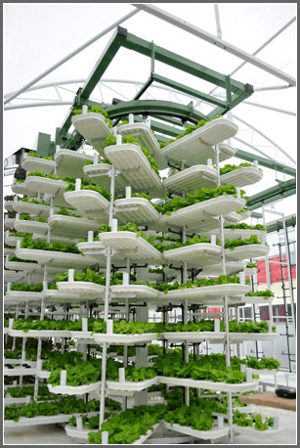
Parking Garage Garden

Parking Garage Garden

Retail isn’t just buying or selling a product. Consumption is the lifestyle of America. For better or for worse, we do it everyday and in many opinions, it isn’t doing any person, animal, or environment any good as it stands today. Rebranding retail is more than just a new user experience product or store environment with the latest technology or the most wanted item or most convenient prices. Rebranding retail is about being conscious about our consumption lifestyle and acting in a way that supports positive changes that the retailers, transportation systems, and city planners make when it’s time to develop or redevelop our environment and essentially, our habits.

I was too late in finding out that Richard J. Jackson, MD, MPH had spoke at Carnegie Mellon on February 21st in a University Lecture Series called: “We are what we eat… and what we build: Designing Healthy Communities”. So, good thing Dr. Jackson has a blog which I found out more information about his views and that he’s been in Pittsburgh more than once talking about DHC. Below is an interview he had on KDKA this past October.

Visit his blog designinghealthycommunities.org for more info about what other cities are doing to DHC.

Here’s the gist: communities where you are able to walk to your material needs, family, and friends- makes for a happier, healthier individual & community. Seems logical and simple right?

GoBurgh: A Transit YES! Movement

logo
I had the opportunity to attend the Pittsburgh Community Redevelopment Group’s presentation of a study done in collaboration with reconnectamerica.org/ that provides metrics and insight on our area and the way it relates to public transportation growth. Super informative and almost colossal in the agenda of how Pittsburgh will develop in to a super-efficient public transportation friendly city. Totally doable though!

The biggest thing, aside from financing, is awareness, education, and re-branding the way Pittsburgh sees public transportation here so that it becomes an effective means of getting around. GoBurgh.org/ is PCRG’s blog site that is developing the tools to promote this awareness and providing information for transit-oriented development (TOD). Check it out and get a pin!

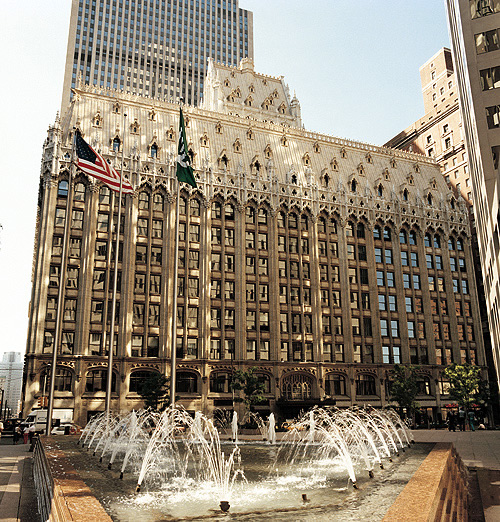
Union Arcade- The story behind a bankrupt beauty of a building

TR9500_UnionTrust
Built in 1915, what is now known as the Union Trust Building, has seen better days and is in economic peril as many of us are. Read more at the Pittsburgh Post-Gazette article in December 2012.

When it was known as the Union Arcade, it hosted 240 retail shops and galleries with enough space for 700 offices. With Saks Fifth Avenue out of the picture downtown, there’s a serious, serious lack of retail options. Apart from Macy’s and Burlington Coat Factory, there are a few local small-businesses, some have been there for years, some have just arrived on the scene thanks to the Pittsburgh Downtown Partnership’s Pop-Up Project Pittsburgh grant awards. There is word on the street that there will be a rejuvenating of Wood St.’s hey-day of a fashion corridor with the new PNC building with commercial space available in 2015.

Let’s take a look at the Union Trust Building again though, it’s in a perfect location off Grant St., next to the W. Penn Hotel, and across from the UPMC building that houses many employees with lunch breaks. It really can become the gem it once was with a little help. In the PG article, there is a young man named Scott Shorr who is looking to fund the purchase of the building with an intent to bring the Transatlantic Economic Council’s headquarters here. It’s a large project, a fantastic idea, and PGHretail would love to see this building flourish again as an international hub and retail market space. See more information about his project at uniontrustbuilding.org.

Re-Routing our Efforts

2098a
We have been anticipating the Sprout Fund’s decision on the grant award. We heard back today and it has been decided that Bricolage in partnership with the Pittsburgh Community Reinvestment Group (PCRG) received the award to put on a collaborative program called “Transit Tales”. We congratulate them and share more about their programing at a later date. Today we will begin re-routing our strategy in order to break down our initial programs as to move forward in a realistic means towards PGHretail goals.

Retail’s Interactive Experience Future

Future-of-Retail

It is Christmas day, we’ve all had our fill of coffee, cookies, and wrapping paper as we tore through the gifts from loved ones. My most valuable gift this year was a renewed subscription to the Harvard Business Review, which I would like to share some of the great knowledge I’ve garnered through my perusing of this publication.

We know tomorrow, the Next Day, most stores will flocked to much like Black Friday with all of the after holiday sales. For retailers, this is the biggest time of year, and though superficially great for the economy, how are the locally owned stores going to compete the rest of the year?

I have worked in wholesale, resale retail, and forward-thinking collaborative retail projects where buying can be seasonal or mostly inexplicable in layman’s terms. Most of the things we buy, we don’t need, and in an atmosphere such as is unknowingly to be in 2013’s revealing of our fiscal cliff for-certain catastrophe, most consumers are looking for deals.

This may not always be the case though, if your store is selling a style or mind-set, in the way that Apple does. In this HBR article, Ron Johnsonn, the former VP of Retail for Apple describes that their main selling point that gets folks in the store to buy is the experience.

6a00e0099496db88330134832aa91b970c-500wi

Part of that experience is the mobile check-out abilities of tablets and smartphones that allow the customer to have a face-to-face relationship with the sales clerk. This means small stores need to take after the likes of Target, who’s mobile application and coupon center is by far the slickest I’ve seen, and integrate technology in their operations. Again, another great HBR Article describes just how and why this should occur.

Want to see deep in to the future? It’s not too far off in this developing virtual supermarket in Korea. The technological abilities to organize, superimpose, and assist decision making for customers with smart technology has just begun.

Retail-Future

With all that being said, when tomorrow comes and you’re in a big box store searching for the super-holiday-end deals, check out the mobile devices, photography equipment, display ideas, and convenience appliances that would enhance your customer’s experience so that you save while you expand your sales plan.

The Link: Public Transportation and Business Corridors Pt. 1

Check out this article!

Pittsburgh is a great city and has many wonderful assets like, parks, bridges, sports arenas, colleges, shopping, cute neighborhoods, low cost of living, you get the picture. Now, Pittsburgh’s want to use its’ existing assets, like the Port Authority, could be a little big greater which make them that much more wonderful.

One of the biggest issues besides the political nature of a government run public transportation [PT] system, is its’ ridership. The Port Authority and the catch 22 situation of expanding bus routes or investing in other modes of transportation come down to this: if there is no destination, there is no need for a route. On the flip-side, business corridors may think: there is no route, what will happen to my destination?

Having lived and worked and visited other transportation systems in US and foreign cities, Pittsburgh could use some upgrades and improvements. Yet the only way an investment will work is if the people use it. I’ve been a big advocate of light rail, yet in this highlighted article above, an expert states this may not be a viable type of transport for this city. He also highlights how the lack of riders on a bus will actually increase the carbon foot print in comparison to the energy used for a single rider in a car.

Look in Pt. 2 for additional considerations and information regarding our need to utilize the existing assets our city has that will benefit you, your community, and the world as a whole.